SEA-Quester
SEA-Quester is investigating marine carbon cycling in novel ecosystems in the polar seas that are emerging due to climate change. Melting sea ice, changing currents, and a warmer ocean are already changing species distribution, behaviour, and metabolism. How these will further impact marine biodiversity and ecosystem functions and services, like carbon sequestration, in the polar seas is poorly understood. However, this potentially has large consequences for meeting biodiversity and climate change mitigation targets.
SEA-Quester runs from 1 February 2024 to 31 January 2028, and is a collaboration between the following partners: Technical University of Denmark, DTU-Aqua (Denmark, Lead), University of Bremen (Germany), Greenland Climate Research Centre, Greenland Institute of Natural Resources (GINR, Greenland), Alfred-Wegener Institute, Helmholtz Centre for Polar & Marine Research (Germany), Leibniz-Institute for Baltic Sea Research (IOW, Germany), Åbo Akademi University (Finland), Institute of Oceanology, Polish Academy of Sciences (IOPAN), GRID-Arendal (Norway), Hereon Helmholtz-Zentrum (Germany), Imperial College London, and Aarhus University (Denmark).
SEA-Quester received funding under Grant Agreement No: 101136480. Our sister project, Polar Ocean Mitigation Potential (POMP) was also funded under the same call HORIZON-CL6-2023-CLIMATE-01-3.
sequestration rates?
emerging open-ocean ecosystems?
burial and accumulation?
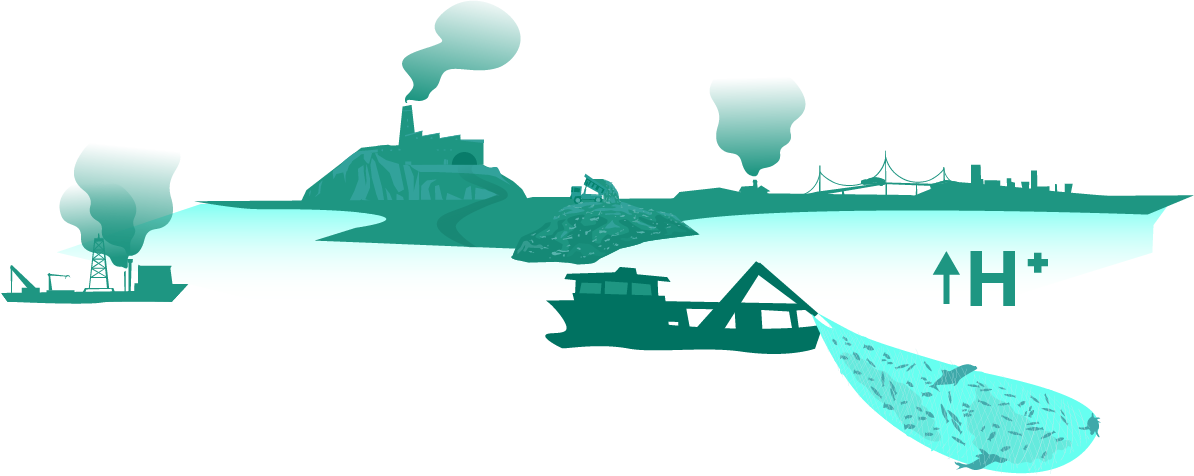
effects of multiple human impacts, like climate change, pollution, and
overfishing, on polar carbon sequestration?
hotspots?
to monitor polar blue carbon?
meaningful contribution to European policy goals?
Project Partners
Our partners span not only a wide geography, but also a wide range of scientific disciplines, bringing together physical, chemical, biological, and geological specialties. From the coast to the open ocean, from shallow waters to the dark depths, we are bringing our interdisciplinary expertise to bear on polar blue carbon! Click on the links below to learn more about the SEA-Quester partners.
The SEA-Quester Team
Andre Visser
Andrea Gottlieb
Anna Lyubavina
Anna Törnroos-Remes
Artur Palacz
Bryce Van Dam
Christian Pansch-Hattich
Christof Pearce
Christoffer Boström
Claudia Schmidt
Cordelia Roberts
Debbie Stienberg
Dina Natalia Berenstein
Dominik Lis
Emily Stidham
Emma L Cavan
Fernando Aguado Gonzalo
Giulia Röeg
Gundel Westerholm
Hamed Sanei
Helmuth Thomas
Henrieka Detlef
Joanna Stoń-Egiert
Jonas Bolduan
Jörg Dutz
Kai Bischof
Karol Kuliński
Karolina Gorn
Katarzyna Dragańska-Deja
Katarzyna Koziorowska
Kati Kemppainen
Keyhong Park
Kristin Doering
Lorenz Meire
Mads Ramsgaard Stoltenberg
Marcin Wichorowski
Maren Staniek
Maren Voss
Marit-Solveig Seidenkrantz
Marja Koski
Michael Karcher
Mie S. Winding
Miroslaw Darecki
Monika Kędra
Monika Zabłocka
Morten Iversen
Nasrollah Moradi
Ndubuisi Ukpabi
Ole Henrik Haslund
Olivia Rempel
Paige Hellbaum Eikeland
Phoebe Armitage
Piotr Kowalczuk
Rachel Lupien
Rafael Goncalves-Araujo
Sabrina Heerema
Sarah Ferrandin
Sarina Niedzwiedz
Sha Ni
Sigrun Jonasdottir
Steven Lutz
Subhadip Mukherjee
Tina Schoolmeester
Torkel Nielsen
No Results Found
Andrea Gottlieb
Photo © Matej Meza Universitat Bremen
Anna Lyubavina
Accountant
Ekonomiservice
Anna Törnroos-Remes
Associate Professor (tenure track),
Faculty of Science and Engineering,
Environmental and Marine Biology
I received my PhD in Marine Biology in 2014 from Åbo Akademi University (ÅAU), after which I worked as postdoc within the EU BONUS project BIO-C3, and as a guest researcher at the Centre for Ocean Life, Technical University of Denmark. In 2018 I moved back to Finland and Turku to work as an assisstant professor (tenure-track) within the interdishiplinary research profile The Sea and the subject Environmental and Marine Biology at ÅAU. I am currently (2021) an associate professor (tenure-track) within The Sea and the Environmental and Marine Biology.
Artur Palacz
Org:IOPAN
Bryce Van Dam
Director of Institute
Institute of Carbon Cycles
Christian Pansch-Hattich
Professor, Faculty of Science and Engineering,
Environmental and Marine Biology
I am a marine eco-physiologist working at Åbo Akademi University in Turku, Finland. I am fascinated by the sea and the interactions species have among each other. I particularly look into the underwater environment with a view for the plentiful scales at which processes occur, from small-scale and short term processes to large-scale and long-term changes.
Christoffer Boström
Associate Professor
Biträdande professor, Fakulteten för naturvetenskaper och teknik, Miljö- och marinbiologi
The ocean has given me so much in my life that I felt doing marine research and teaching marine biology is the least I can do to save the sea for my kids to enjoy. I like the size of ÅA, big enough to be a critical mass, but simultaneously small enough to rapidly test and develop new strategies across disciplines. We can not compete with the breadth of the biggest universities, but instead show excellence in specific core areas like marine ecology. The staff-student ratios are beneficial for students, and my impression is that students can get personal input throughout their studies at all levels.
Claudia Schmidt
PhD Student
Marine Carbon Cycling
Cordelia Roberts
Debbie Stienberg
CSX Professor
My research interests are in zooplankton ecology and physiology, coastal and deep-sea food webs, and carbon and nutrient cycling. Much of my research program focuses on how zooplankton influence cycling of nutrients and organic matter, and how climate affects long-term change in zooplankton communities. Our laboratory has been involved in a number of projects with this theme, including the role of zooplankton vertical migration in transport of nutrients, the ecology of gelatinous zooplankton “blooms” and their affect on fluxes of organic matter, the importance of zooplankton in the cycling of dissolved organic matter, mesopelagic zooplankton and particle flux, and the effects of mesoscale eddies and a large river plume on zooplankton community structure. We are also using long-term data sets from the Western Antarctic Peninsula and the Sargasso Sea off Bermuda to study the effects of climate change on zooplankton communities, and how these community changes may affect ocean food webs and biogeochemistry. I have worked in many marine environments including coastal California, the Antarctic, the Sargasso Sea, the subtropical and subarctic North Pacific, the North Atlantic off western Europe, the Amazon River plume, and the Chesapeake Bay.
Dina Natalia Berenstein
Research Coordinator, National Institute of Aquatic Resources
Dominik Lis
PhD/Post-Doc
Org:IOPAN
Email:dolis@iopan.pl
Emily Stidham
PhD/Post-Doc
Emma L Cavan
Fernando Aguado Gonzalo
PhD/Post-Doc
I am an enthusiastic and passionate marine oceanographer. My research focuses on carbon biochemistry and air-sea CO2 fluxes in the Arctic region
Org:IOPAN
Email:aguadof@iopan.pl
Giulia Röeg
PhD/Post-Doc
Gundel Westerholm
Hamed Sanei
Ph.D., Professor & Research Chair
Helmuth Thomas
Director of Institute
Institute of Carbon Cycles
Joanna Stoń-Egiert
Org:IOPAN
Jonas Bolduan
Jörg Dutz
Dr. Jörg Dutz
Department: Biological Oceanography
Org:The Leibniz Institute for Baltic Sea Research, Warnemünde
Phone:+49 (381) 5197-3479
Kai Bischof
Prof. Dr. Kai Bischof
Photo © Universität Bremen
Research interests
- Marine Botany
- Ecophysiology of marine algae
- Acclimation strategies towards abiotic stress
- Photosynthesis in marine algae and seagrass
- Mechanisms of range expansion and bioinvasions
- Physiological protection mechanisms against high light stress
- Generation and scavenging of reactive oxygen species
- Comparative research on related algae from different climate regions
University teaching
- Aquatic flora
- Concepts of marine ecophysiology
- Ecophysiology of marine algae
- Plant physiology
Appointments & Education
- Since 2024: Deputy Director of MARUM – Center for Marine Environmental Sciences
- Since 2020: Coordinator of the EU H2020 project FACE-IT
- 2014-2020: Chair of the Kongsfjord Ecosystem flagship program
- Since 2006: Professor for Marine Botany, University of Bremen, Germany
- 2004-2007: Head of Junior Research Group “Polar Algae”, Institute for Polar Ecology, University of Kiel and Alfred Wegener Institute for Polar and Marine Research, Bremerhaven, Germany
- 2003-2006: Assistant Professor for Biological Oceanography, Institute for Polar Ecology, University of Kiel, Germany
- 2001-2003: PostDoc at the Department of Marine Biology, University of Groningen, The Netherlands
- 2000-2001: PostDoc at the Alfred Wegener Institute for Polar and Marine Research, Bremerhaven, Germany
- 1997-2000:PhD student at the Alfred Wegener Institute for Polar and Marine Research, Bremerhaven, Germany
- 1991-1996: University studies of biology at the Universities of Bochum and Osnabrück (Germany), majors: Botany, Ecology, Biophysics
Karol Kuliński
Org:IOPAN
Email:kroll@iopan.pl
Karolina Gorn
ECR – Data Manager
Org:IOPAN
Katarzyna Dragańska-Deja
PhD/Post-Doc
Org:IOPAN
Katarzyna Koziorowska
Researcher
Org:IOPAN
Email:kkozio@iopan.pl
Kati Kemppainen
Project Coordinator, Research services
Keyhong Park
Lorenz Meire
Senior Researcher
Greenland Climate Research Centre
Researcher at NIOZ (Royal Netherlands Institute for Sea Research)
Research area: Oceanography, glacier-ocean interaction, biogeochemistry
Email:mrs@geo.au.dk
Marcin Wichorowski
CIO at Institute of Oceanology, Polish Academy of Science
Org:IOPAN
Maren Staniek
PhD/Post-Doc
Maren Voss
Prof. Dr. Maren Voß
The biogeochemical cycling of nitrogen compounds and related elements is a major focus of my work. Since almost two decades I have been leading a group of students and PostDocs supported by various projects funded by the German Science Foundation, European Union, the Ministry of Science and Technology plus the basic institutional funding. Several projects in the past focused on nitrogen fixation activity in the Baltic Sea, the South China Sea off Vietnam and the Atlantic Ocean under the present situation and under ocean acidification scenarios. Research in the Baltic Sea concentrated on budgets of nitrogen for the entire Sea, and on nitrogen cycling in coastal and estuarine waters. We often use stable isotope signatures in environmental samples to better understand sources of nitrogen compounds or nitrogen turnover processes. Furthermore, we use labelled isotope compounds to measure rates like nitrogen fixation or nitrification. For more information please visit our website of the group “Marine N-cycle”.
Org:The Leibniz Institute for Baltic Sea Research, Warnemünde
Phone:+49 381 5197 209
Marit-Solveig Seidenkrantz
Ph.D.
Head of Department, Department of Geoscience
Professor, Arctic Research Centre – Arctic Research Centre, Høegh Guldbergs Gade
Marja Koski
Professor, National Institute of Aquatic Resources
Besides DTU Aqua I have worked 6 years in the Netherlands Institue for Sea Research, as well as ca 5 years in the University of Helsinki. In addition, I have made numerous short-term research visits (1-4 weeks) to different institutes in Sweden, Norway, Germany and Greenland. I have participated in experiments and / or cruises of the EU-projects FATE, BIOHAB and DOMTOX, and in a number of other joint international research efforts.
Language Skills:
Finnish
Swedish
Danish
English
Dutch
French
Education/Academic qualification
Docent in Aquatic Sciences, University of Helsinki
… → 2007
PhD in hydrobiology / marine biology, University of Helsinki, Finland
1994 → 1999
Master degree in hydrobiology, University of Helsinki, Finland
1988 → 1993
External positions
Post doc and research scientist
2002 → 2009
Post doc, Netherlands Institute for Sea Research
1999 → 2002
PhD student, University of Helsinki
1994 → 1999
Michael Karcher
Senior scientist
Mie S. Winding
Head of Department
Greenland Climate Research Centre
Exploring the intersection of biodiversity, ecosystems, and climate, I am a dedicated marine biologist with a profound fascination for the ocean and its wonders. As a strategic and operational leader, I am passionate about driving change collaboratively and achieving impactful results. My career is built on the principles of teamwork, innovation, and fostering an environment where my team can thrive and excel. Whether advancing scientific research or management, I am dedicated to creating a positive and lasting impact.
Miroslaw Darecki
Assoc. Prof.
head of the laboratory
Org:IOPAN
Email:darecki@iopan.pl
Monika Kędra
Monika Zabłocka
PhD Researcher at Institute of Oceanology Polish Academy of Sciences
Org:IOPAN
Morten Iversen
Section Head
Biological oceanographer with extensive research experience in mechanistic studies on production, export, transformation, and recycling of organic matter in the ocean. Strong focus on biogeochemistry and microbiology where I use multidisciplinary approaches to link small-scale processes to the full water column across high and low latitudes, going from time-scales spanning from minutes to decades. Linking experimental studies with field observations that include direct process studies during sea-going expeditions and long-term observations using moorings, satellites and glider measurements. Pioneering and development of new optical techniques and equipment that allow to go beyond bulk concentration measurements and directly quantify in situ processes such as size-specific settling velocities and microbial degradation of organic aggregates.
Nasrollah Moradi
Scientist
Application of advanced numerical models and modern data science techniques to leverage and combine in-situ & remote observations as well as laboratory measurements in order to improve our understanding of marine biological carbon pump
Specific focus:
– Lateral transportation and transformation of organic matter – linking coastal and open ocean environments
– Impact of ocean mesoscale eddies on carbon export to deep ocean
– Small-scale mass transfers within and around sinking marine particles and phytoplankton colonies
Ndubuisi Ukpabi
Postdoc, Department of Geoscience
My specialization centers on the examination/interpretation of microfossils, with a focus on nannofossils and palynology. My professional activities encompass their use in reconstructing paleoenvironments and paleoecologies, dating geological ages (relative dating), establishing biozones, guiding drilling decisions (biosteering), and delineating biostratigraphic/sequence stratigraphic frameworks. I am expanding my expertise to include foraminiferal, geochemical, and paleoceanographic studies.
Email:nduk@geo.au.dk
Ole Henrik Haslund
Research Coordinator, National Institute of Aquatic Resources
Olivia Rempel
Videographer
I am a Canadian journalist and documentary filmmaker interested in sustainability and environmental issues.
During my undergrad, I studied journalism and an interdisciplinary program called Environment, Sustainability, and Society at the University of King’s College and Dalhousie University. I later completed a master’s at the UC Berkeley Graduate School of Journalism, focusing on documentary filmmaking.
I began my career doing logistics and communications for Students on Ice, a non-profit that brings high school and university students to the Arctic and Antarctica on educational expeditions. Later I interned for PBS NOVA, led open-source investigations at the Human Rights Center at the UC Berkeley Law School, and worked on documentaries that have screened at numerous film festivals around the world, from Los Angeles, California, to Addis Ababa, Ethiopia.
In September 2020 I began working at GRID-Arendal to help grow the Technology and Innovation team’s video and documentary capabilities.
Paige Hellbaum Eikeland
Expert (Polar & Climate)
As a Researcher in the Polar & Climate programme, I leverage my wildlife and habitat management expertise to further the GRID-Arendal thematic portfolio in biodiversity and conservation. Science communication is at the heart of this work, and I love sparking interest and creating “aha” moments – whether it be for policymakers, managers, scientists, students, or the public.
I received my bachelor’s degree from the University of Wyoming in 2015 and worked in both the public and private sectors before obtaining my master’s in Applied Ecology in 2022. I received a Fulbright grant to complete my degree in Norway, studying ungulate browsing damage and wildlife conflicts for my thesis. Afterwards, I interned at the Scientific & Technical Advisory Panel (STAP) for the Global Environmental Facility (GEF). I have continued collaborating with the UNEP-Vienna office at GRID on projects such as Vanishing Treasures and Central Asian Mammals and Climate Adaptation (CAMCA).
Nothing beats the rush of feeling a fish at the end of your line or getting a stuff block in volleyball. When I am not working, you can find me curled up with a good book, brewing beer, or hiking in the forest… but preferably never far from a warm cup of tea.
Phoebe Armitage
Piotr Kowalczuk
Professor at Institute of Oceanology of Polish Academy of Sciences. ul. Powstańców Warszawy 55. 81-712 Sopot. POLAND.
Org:IOPAN
Email:piotr@iopan.pl
Rachel Lupien
Assistant Professor, Department of Geoscience
Tenure Track Assistant Professor, iCLIMATE Aarhus University Interdisciplinary Centre for Climate Change – iCLIMATE Aarhus University Interdisciplinary Centre for Climate Change, Høegh-Guldbergs Gade
Rafael Goncalves-Araujo
Dr.
Sabrina Heerema
Head of Programme, Polar and Climate
Born and raised in Canada, the Arctic and especially Indigenous Peoples have always held a special place in my heart. It has been an honour to have the opportunity to cooperate with the Arctic Council Secretariat previously and very exciting to focus on communicating the important work of GRID-Arendal’s Polar Programme. Currently my focus is on the Horizon 2020 projects Arctic PASSION and EcoTip, working together with Indigenous communities.
I studied Geography and GIS, and have worked as an Environmental and foreign development project manager, as well as a GIS consultant. Throughout those experiences, it was always clear to me how important it is to communicate the activities, impact and results of the projects to the public and stakeholders. I have always admired the way that GRID-Arendal communicates scientific information about the environment, and I am thrilled to be a part of the team.
I enjoy traveling and spending time outdoors in nature (especially in or on the sea) and with friends, family and animals.
Org:GRID-Arendal
Email:sabrina.heerema@grida.no
Sarina Niedzwiedz
PhD/Post-Doc
Sigrun Jonasdottir
Senior Researcher, National Institute of Aquatic Resources
Education/Academic qualification
Ph D, State University of New York, USA
… → 1992
MSc, University of Washington, USA
… → 1986
BSc, Univeristy of Iceland
… → 1983
External positions
Research Associate, Danish Institute for Fisheries Research
1994 → 1998
Post doc, Danish Institute for Fisheries Research
1993 → 1994
Steven Lutz
Senior Programme Officer, Blue Carbon Lead
At GRID-Arendal I work to advance the concept of blue carbon as a nature-based blue economy solution to the impacts of climate change. My career with and in the civil society, academic and legislative sectors encompass over 25 years of experience in marine science, conservation, and policy, and over 14 years of experience in blue carbon.
My projects at GRID-Arendal have included the Abu Dhabi Blue Carbon Demonstration Project (on behalf of Abu-Dhabi Global Environmental Data Initiative (AGEDI)), a global first in national coastal blue carbon scaling and uptake, and the Global Environment Facility’s Blue Forests Project (on behalf of the United Nations Environment Programme), which piloted blue carbon on the voluntary carbon market and critically championed its recognition and uptake in international climate and biodiversity treaties, and the UAE Oceanic Blue Carbon project (in partnership with AGEDI), the world’s first national science and policy assessment of oceanic blue carbon. Additionally, I developed the Norwegian Blue Forests Network and serve on the Coordinating Group of the International Partnership for Blue Carbon.
I hold a master’s degree in Marine Affairs and Policy from the University of Miami’s Rosenstiel School of Marine & Atmospheric Science and my work prior to GRID-Arendal included a focus on marine protected areas, coral reef science, deep sea coral biogeography, and marine environmental policy analysis and advocacy in the USA.
Subhadip Mukherjee
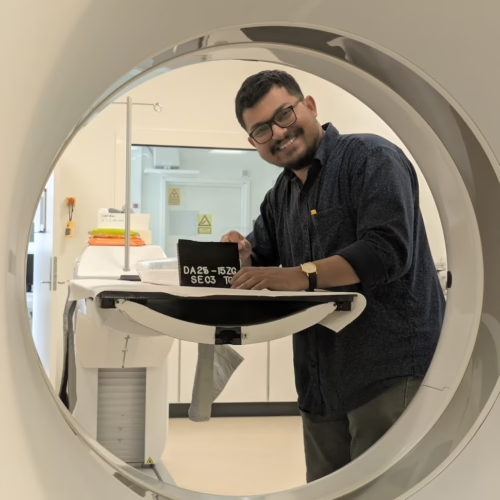
I’m a PhD student at the Department of Geosciences, Aarhus University, within the GreenTrace Project. I specialize in arctic paleooceanography research with a focus on X-Ray CT image processing, and numerical methods. My doctoral work focuses on developing and refining Machine Learning segmentation models for CT scans, especially for trace fossils and sedimentary structures, with the aim of using bioturbation traces as a paleoenvironmental proxy and quantifying past carbon storage in the Arctic.
Occasionally I also dabble in a bit of marine geochemistry, paleomagnetics, and paleoclimate studies.
Tina Schoolmeester
Head of Programme, Polar and Climate
Born and raised near the sea, I was determined to spend my professional career in the marine environment. I graduated as a marine geologist from the University of Ghent, Belgium and followed this up with a Master in Marine Geotechnics from the University of Wales at Bangor. This led me to work as an offshore geophysicist for more than five years. After seeing all those beautiful seascapes, I decided I´d rather dedicate my career to the marine environment and joined the marine geosciences group at the University of Barcelona. Over the years, my research related to climate change, Antarctica, submarine landslides and submarine canyons.
In 2006, I joined the UNEP Shelf Programme at GRID-Arendal, assisting developing States and Small Island Developing States (SIDS) with the delineation of their continental shelves. Acknowledging the linkages between natural systems and the people living in these systems, I increasingly became more interested in the bigger picture, from the poles to the mountains, from source to sink and more importantly the interaction between humans and the environment. More recently, the gender dimension — the differences between men, women, children and adults in their interaction with nature — has caught my interest.
I work on a variety of topics in marine, polar and high mountain contexts, always with the aim to improve the communication of scientific findings in an appropriate and accessible way to policy-makers in order for them to make the right choices in drawing up policies aiming at sustainable solutions to the challenges of climate change and environmental degradation.
Vacancies
Maybe you see yourself in polar blue carbon? SEA-Quester will be hiring several post-docs and PhD students over the course of the 4-year project.
Feedback
Thank you for visiting our website! Your feedback is very important to improve our information products.
The survey will take approximately 4-6 minutes to complete.
Analytics tools can give you a lot of quantitative information about where your website’s visitors come from, but they’ll never be able to give you the qualitative data that asking questions provides.