SEA-Quester at OSM 26 in Glasgow
SEA-Quester researchers presented their latest findings at the 2026 Ocean Sciences Meeting in Glasgow, the flagship conference for the ocean sciences and the larger ocean-connected community.
SEA-Quester at OSM 26 in Glasgow
SEA-Quester researchers presented their latest findings at the 2026 Ocean Sciences Meeting in Glasgow, the flagship conference for the ocean sciences and the larger ocean-connected community. The Ocean Sciences Meeting is an Endorsed Decade Action program with the United Nations Decade of Ocean Science for Sustainable Development. Co-sponsored by the American Geophysical Union (AGU), the Association for the Sciences of Limnology and Oceanography (ASLO), and The Oceanography Society (TOS).
Fernando Aguado Gonzalo from the Institute of Oceanology of Polish Academy of Sciences (IOPAN) presented a poster related to surface methane distribution in the European Arctic.
Fernando writes, “Methane is one of the most important greenhouse gases. Even though it’s important for the global climate, the main sources and regions of CH4 release in the Arctic remain poorly understood. Our study presents a compilation of data collected over six years in the European Arctic, indicating hotspots of methane release and its temporal variability. The poster drew a large group of scientists into a lively discussion, most of whom were impressed by our ability to obtain such a large dataset and present it concisely.”

Fernando, pictured with his poster presentation. Photo: Laura Bromboszcz
Karol Kuliński (IOPAN) presented an enlightening presentation based on the publication ‘The internal consistency between calculated and measured variables of the marine carbonate system in Arctic open and coastal waters, case study: Atlantic Arctic.’
He also nicely presented a guide to calculate with high accuracy the parameters related to the carbonate chemistry in Oceanic and coastal Arctic waters. Carbonate chemistry is the backbone for ocean acidification studies, carbon inventory, and CO2 fluxes, among others. Therefore, its work was enthusiastically received at the conference.

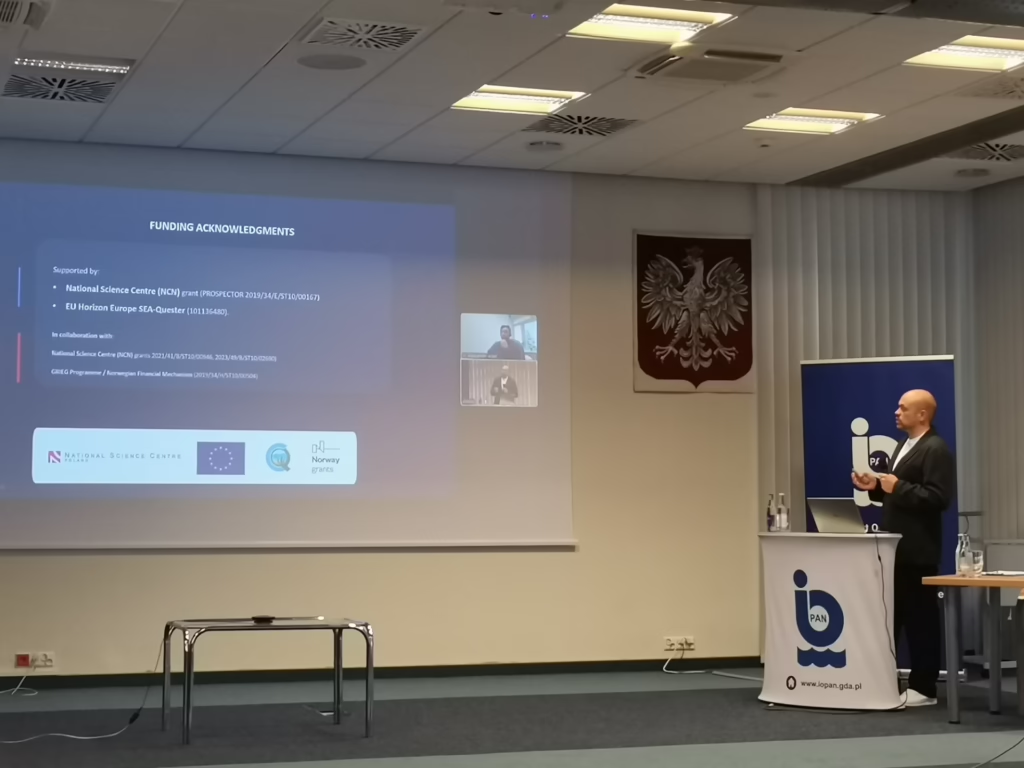
Karol Kuliński presents a guide to calculate carbonate chemistry in Oceanic and coastal Arctic waters. Photo: Laura Bromboszcz

Karol Kuliński presenting a case study. Photo: Laura Bromboszcz
SEA-Quester delivered many other presentations at the event, including the following topics:
- Alkalinity and DIC Variability in East Greenland Fjords
- POC and DOC in incubations
- Changes in functional diversity of zooplankton related to the biological carbon pump in the Greenland Sea during Spring
- Impact of changing sea ice conditions on carbon export in the central Arctic Ocean
- Nutrient dynamics next to Greenland’s largest glaciers and how they shape the fjord ecosystems
- Advancing Ecosystem Service Valuation for Marine Conservation: A Cascade Model Approach for the Baltic Sea
- Carbon Transport by Copepods via the Lipid Pump
- Fishing down the food web: the cost in legacy carbon
- Marine Carbon Cycle: Past Insights, Present Patterns, and Future Perspectives
- Unravelling the role of lipids in the Southern Ocean Carbon Cycle from Surface Water to Zooplankton Faecal Pellets
- Bridging Science, Policy and Society for Sustainable Marine Biodiversity Transitions: Insights from the Centre for Sustainable Ocean Science
- Effects of sediment resuspension
- Beyond Martin’s b: In-Situ observations of BCP efficiency across the Atlantic Ocean
- New in-situ Subsea Winched Profiling System (SWIPS) camera for particle characterisation in the upper ocean at HAUSGARTEN (HG) in the Fram Strait
- Biogeographic Overlap and Species Turnover, Yet Limited Trait Diversity in Arctic Shelf Infauna
- Advancing Our Knowledge of Land-Sea Connections in the Global Carbon Cycle
- Net-zero ocean harvesting
- From Peatlands to the Sea: Mechanisms of Carbon Transformation and Persistence Along the Terrestrial-Marine Continuum
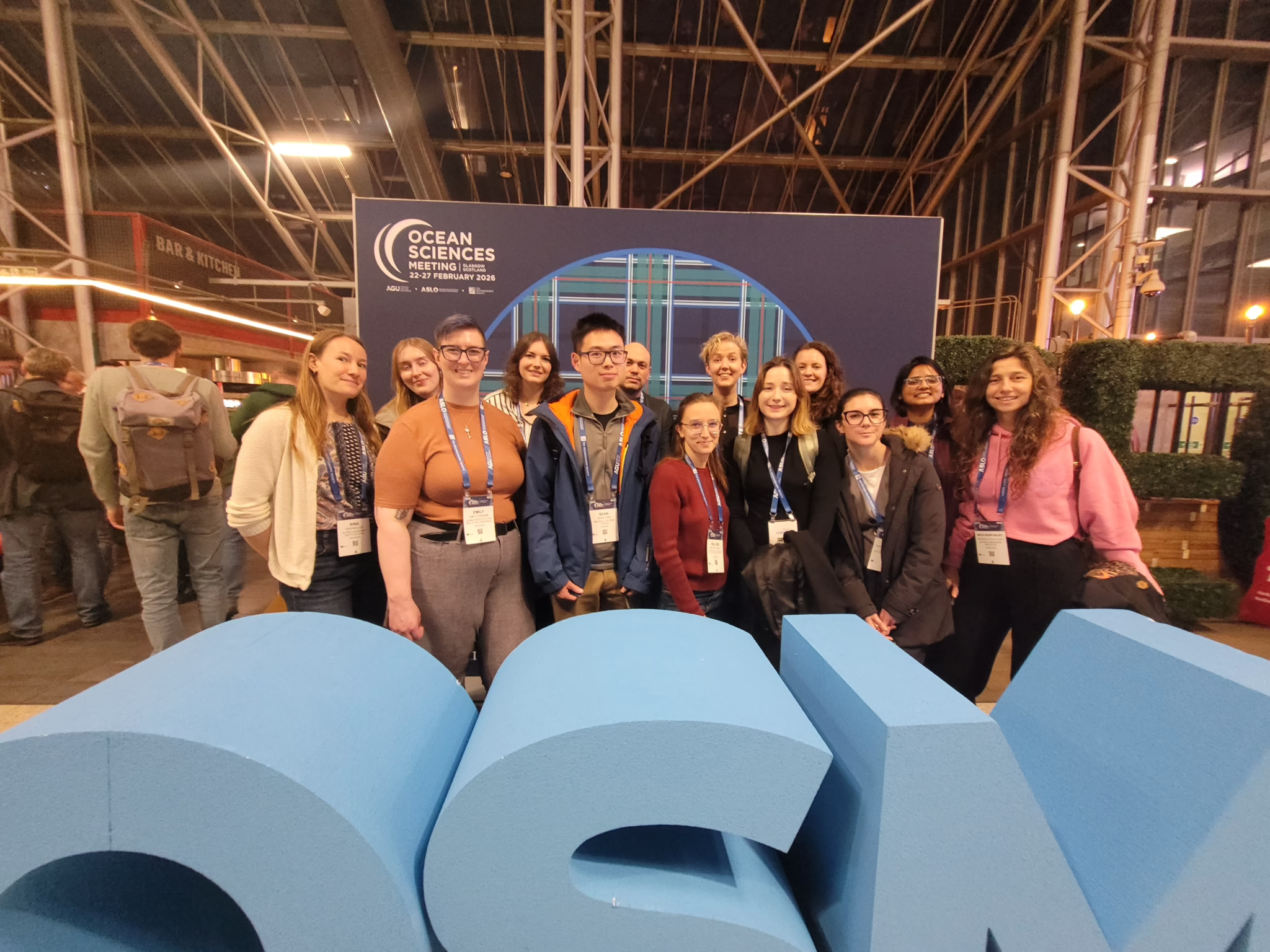
Early-career researchers involved in SEA-Quester and its sister project, POMP, also met during OSM 26 in between presenting their research.


Early-career researchers at OSM26. Photo: Laura Bromboszcz
Related