SEA-Quester at ASSW 2026
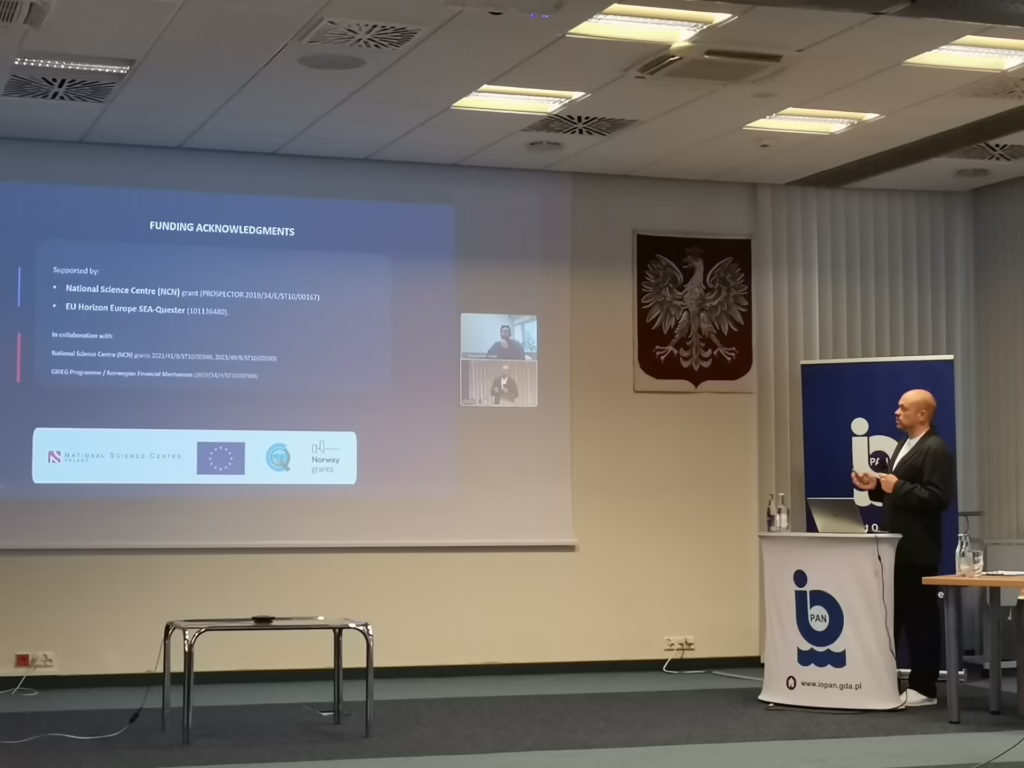
SEA-Quester and other EU funded polar projects gathered in Aarhus for the 2026 Arctic Science Summit.
Planning how to improve project dissemination and legacy at Arctic Science Summit Week 2026
It was day 7 of the 2026 Arctic Science Summit Week, 8 am after what was a successful conference dinner and evening and the clocks moved ahead. The days have been long and intense, yet a crowd of eager polar researchers and professionals gathered bright and early, some without having had breakfast, before 8 am to participate in an EU Polar Cluster workshop on Legacy, Policy and Impact.
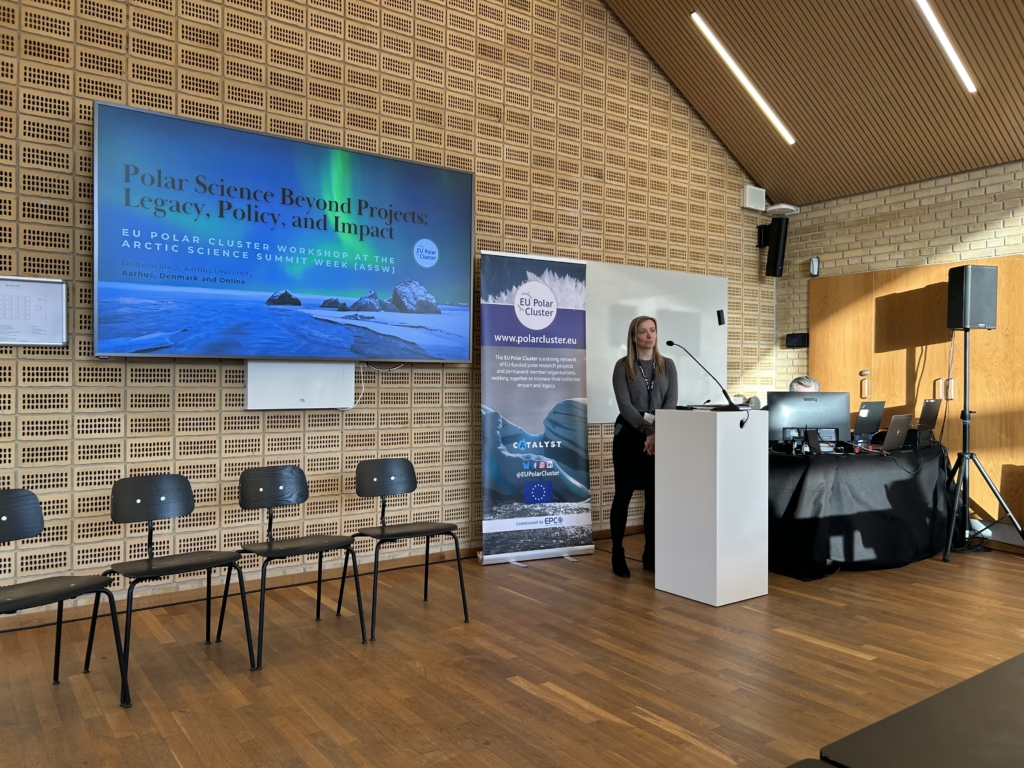
The European Polar Coordination Office’s Kylie Owen had coordinated contributions from several EU Polar Cluster member projects and designed the session plan together with each.
GRID-Arendal’s Sabrina Heerema, representing the SEA-Quester project, was delighted to moderate session 1 focused on best practices in dissemination. The session began with two presentations: one from AMAP’s Rolf Rødven on how to reach policymakers, and one jointly from UniVie’s Alexandra Meyer and UArctic’s Hanne Christiansen on project dissemination experiences from the Nunataryuk and ILLUQ projects.

Alexandra Meyer presented lessons learned from Nunataryuk and ILLUQ permafrost projects.
“More projects should take advantage of the [dissemination support offered by] the European Polar Board and ICES” – Rolf Rødven
The presenters and three others (EPCO’s Maria Grigoratou, representing Nicole Biebow; CRN-IPS’s Giuliana Panieri and APECS’ Deniz Vural) then participated in a panel discussion of questions, including:
- What are our biggest lessons learned from project dissemination?
- What does successful science dissemination mean to you?
- What does truly impactful dissemination look like, and how do you measure whether it worked?
- What best practices have you seen for meaningfully engaging young people in polar science and helping them to connect their research outcomes to societal impacts?
- What have you learned about tailoring dissemination ot different target audiences, and can you share a strong example?
- What approaches have you found worked best in communicating uncertainty in science while still maintaining trust?
- How do you identify the intended societal users of project outputs, and how do you design dissemination to meet their needs?
- How can projects move beyond one-way communication and dissemination toward more sustained dialogue and co-production?
- What approaches help make complex results easily digestible and actionable for the stakeholders who need them most?
- What have you learned about the role and benefits of clustering in disseminating results and the societal impact of research?
- What dissemination tools or formats have you seen genuinely improve knowledge uptake, and why did they work?
- How can projects ensure that their outputs are genuinely useful for Arctic communities?
The two presenters and all panellists each offered their best pieces of advice and learned experience to answer these questions, and the audience was left with a wealth of tips, lessons learned, best practices and key messages. Session 1 has been described as inspiring and very interesting, with many useful examples.

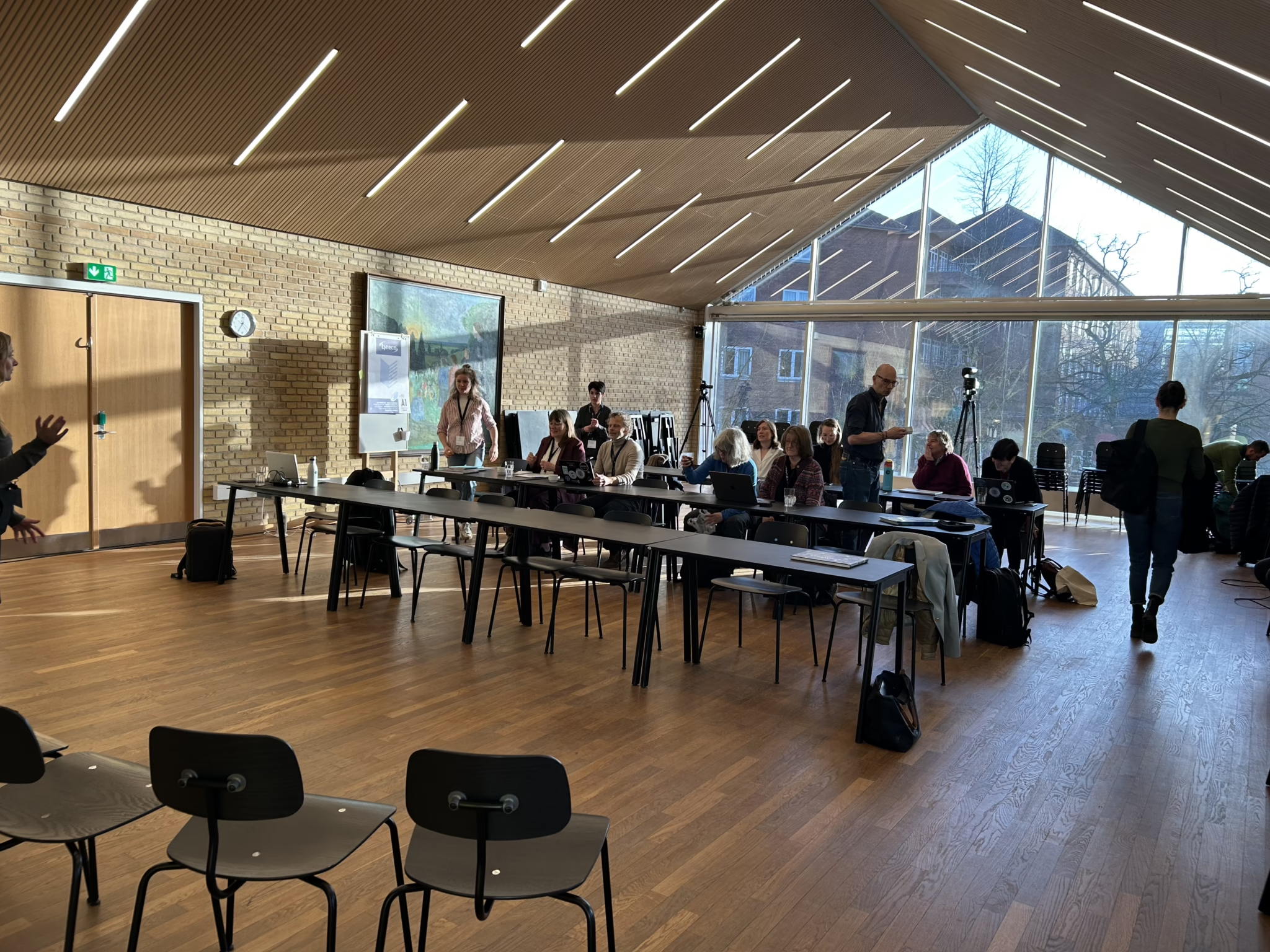
Hannele Savela is moderating a very interesting session 2 on legacy planning, with valuable ideas from the panellists
“Every project should share lessons learned or a knowledge synthesis” – Jon Børre Ørbæk
Session 1 was followed by session 2 on building project legacy, led by Hannele Savela, and session 3 was a final wrap-up discussion on how we can improve project dissemination and legacy planning. While each of the presenters will share their presentation, the European Polar Board will also review notes from the three sessions to produce a best practices guidance document. The outcome document will be made available on the EU Polar Cluster website and the EU’s Polar Catalyst Platform when ready.

The workshop program details
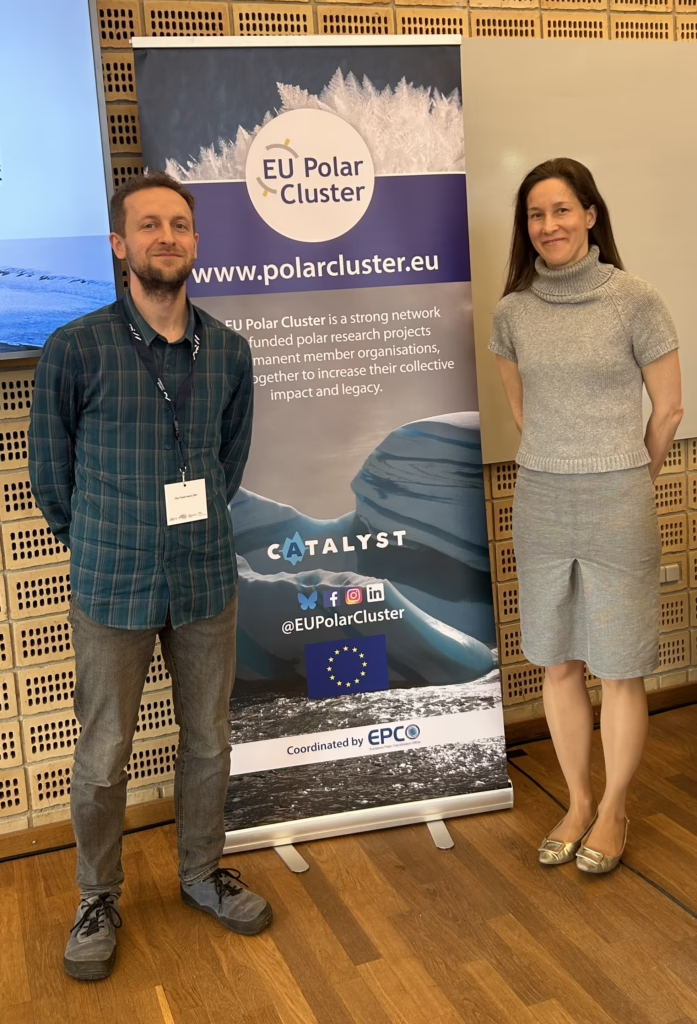
Artur Palacz and Sabrina Heerema contributed to the workshop preparation, moderation and discussion on best practices for data legacy.
Related